
C2L-PHL / CITY OF PHILADELPHIA
Clear information.
Connected futures.

Content strategy and communications for Career Connected Learning PHL—helping young people, families, and employers find the information they need within phila.gov.
THE PROJECT FOCUS
Find it.
Understand it.
Act on it.

Content and communications work by Dwayne Hallager, with input from the City of Philadelphia, Philadelphia Works, the School District of Philadelphia, and JEVS.
The live page uses the City’s established layout.
Content organization · SEO planning · Audience pathways · Partner-informed communications
01 / WEBSITE SHOWCASE
OPPORTUNITY, EXPLAINED.
● ● ● phila.gov / C2L-PHL
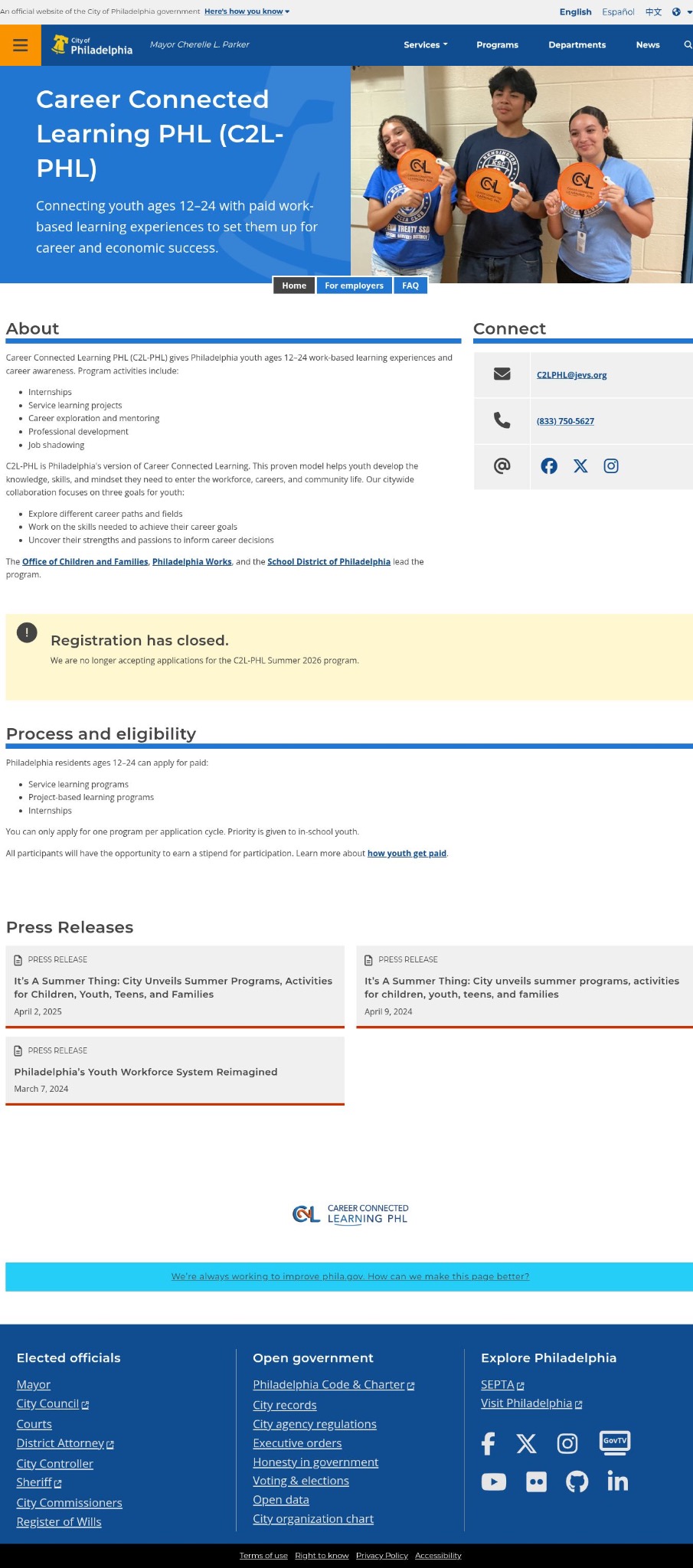
Public website capture supplied for this portfolio. Program dates and notices reflect the capture date.
ONE PROGRAM. DIFFERENT QUESTIONS.
Youth.
Families.
Employers.
The live page brings program purpose, eligibility, participation information, and contact routes into an established government website.
Our contribution centered on organizing and communicating the content within that framework.
02 / THE CHALLENGE
Make the next step
easy to find.
Different audiences, different questions.
Young people and families need clear program and application information. Employers need a direct explanation of how to participate.
A shared government framework.
The content had to work within phila.gov’s existing design and navigation, while keeping the program recognizable.
A practical measure of success.
The plan focused on useful answers, understandable pathways, and a clear route to the next action.
03 / PLANNING & UX
A strategy of clarity.
The planning approach connected audience questions, content structure, and discoverability. The diagrams below are retrospective illustrations of that approach.
01 / CONTENT SKETCH
Start with the question.
Who is this for? What do they need to know? Where do they go next?
02 / CONTENT WIREFRAME
Give answers a home.
Program overview → eligibility and participation → FAQs → contact and next steps.
03 / RESPONSIVE CONCEPT
Keep the reading order.
Prioritize essential information, use descriptive headings, and preserve clear actions as content stacks on smaller screens.
Content strategy
Group information around youth and family needs, employer participation, and recurring questions. Use plain language and consistent program messaging to make approved information easier to understand.
SEO strategy
Plan content around relevant program searches and real audience questions. Use descriptive headings, useful FAQs, clear page summaries, and relevant links to help people find the right information.
The aim was stronger discoverability and clearer navigation; this case study does not claim a measured ranking or traffic increase.
PROPOSED STANDALONE EXPERIENCE
Exploring a dedicated
program home.
The supplied concept explored a more expressive standalone experience. It is shown as a planning proposal, separate from the live phila.gov layout above.
The underlying priority stayed consistent: introduce the program, distinguish audience needs, and make useful next steps visible.
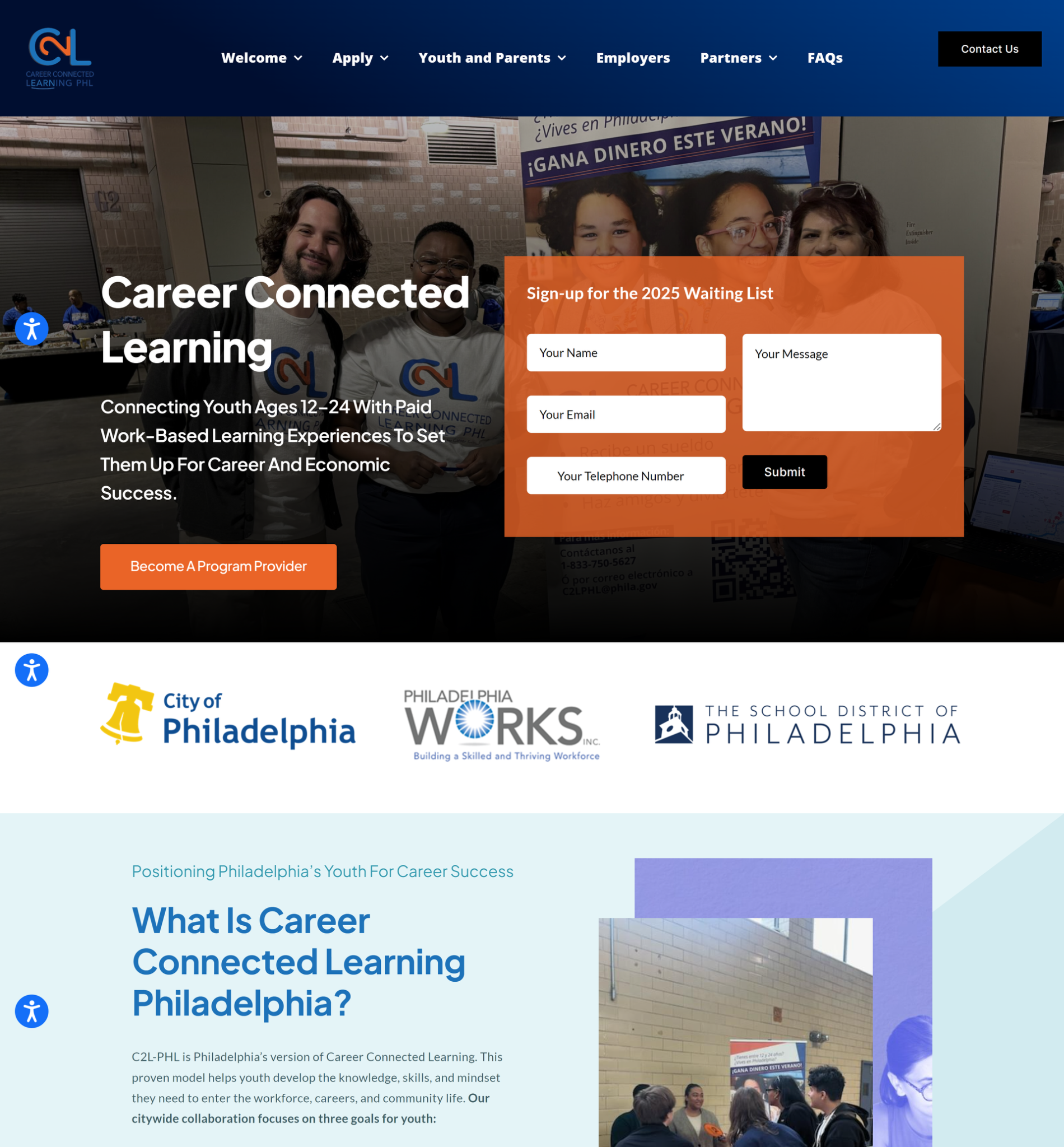
Supplied concept excerpt · proposed design
04 / VISUAL IDENTITY
Public trust.
Program energy.
City blue
#0F4D90
Program blue
#2176D2
Amber
#F99300
Charcoal
#444444
Light gray
#F0F0F0
White
#FFFFFF
Montserrat
Headings · Semibold / 600
Open Sans
Body copy · Regular / 400
Palette and typography follow the supplied phila.gov reference. These are the City’s existing visual standards, not a new identity designed for this project.
05 / DELIVERABLES
Useful details.
Clear destinations.
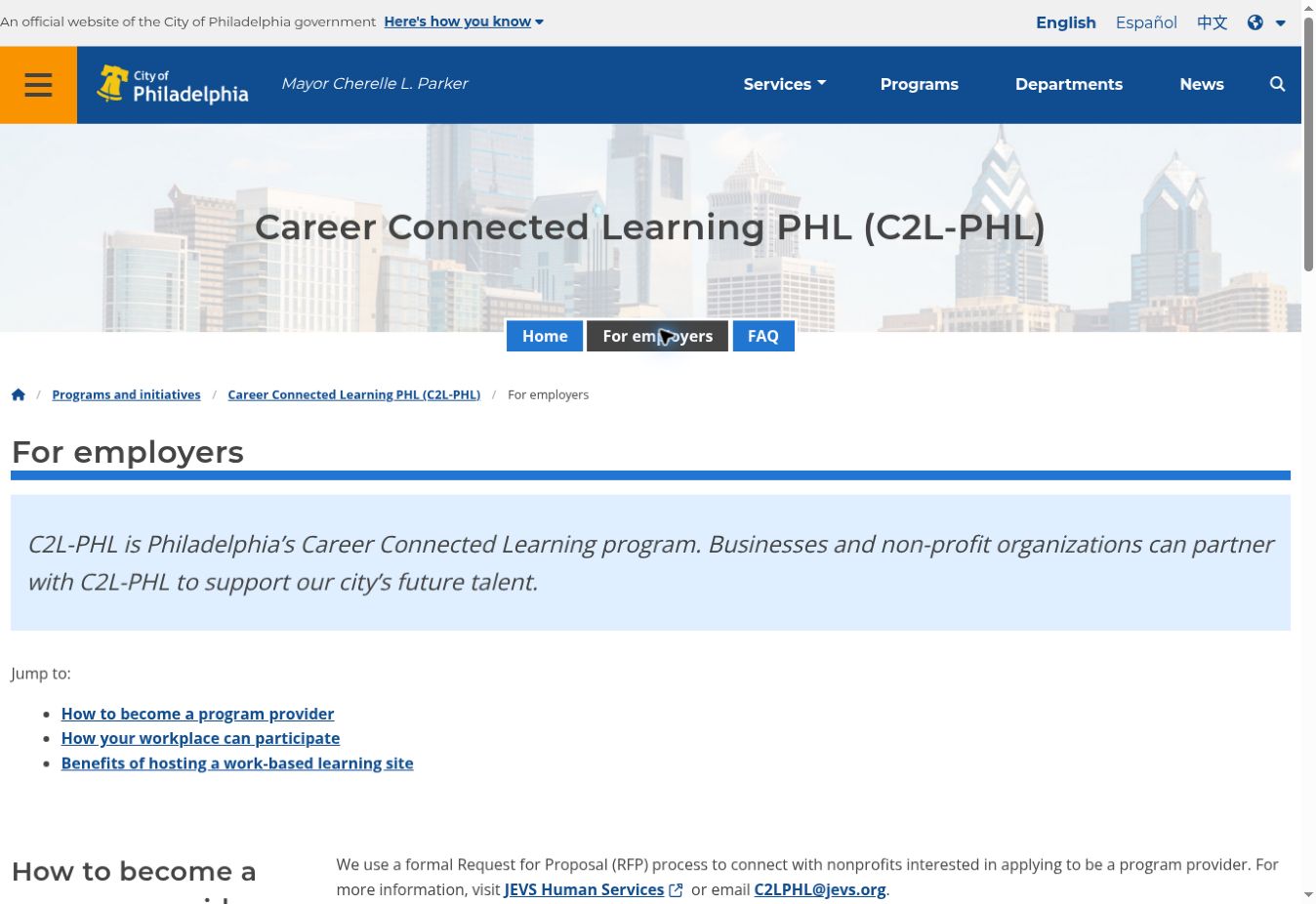
Employer participation
Organized information about provider and worksite participation, with clear section headings and links to relevant next steps.
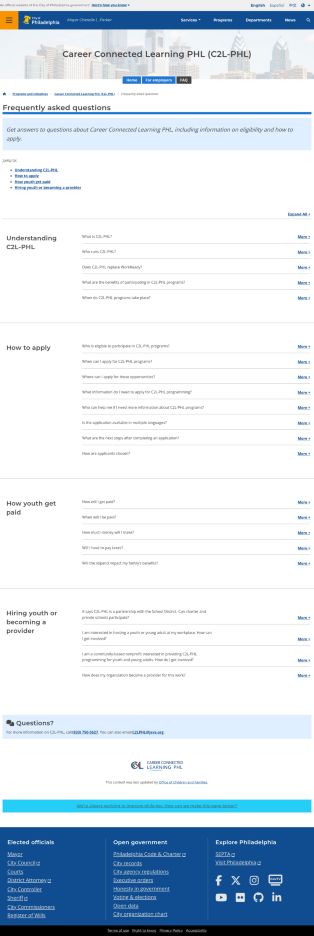
Answers by topic
FAQs grouped around understanding the program, applying, payment, and employer participation.
Project contributions: audience-focused content organization, program messaging, FAQ planning, employer information, SEO planning, and partner-informed communications.
06 / COMPETITIVE ADVANTAGE
Clarity is the advantage.
Audience first
Organize content around the decisions young people, families, and employers need to make.
Content and search together
Connect discoverability with helpful answers, so finding the page leads to understanding the program.
Built for the context
Work within an established public-sector framework while making the program’s information easier to navigate.